
Water Tank Waterproofing That Stops Costly Leaks
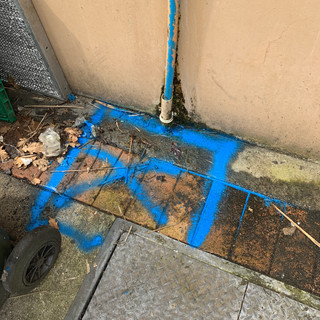
A water tank that is losing water does not always have a visible crack. Moisture can escape through joints, penetrations, ageing coatings or fine concrete defects, then travel before appearing as damp ground or staining. Effective water tank waterproofing starts by identifying where the water is actually leaving, so the repair deals with the cause rather than simply covering the symptom.
For Auckland property owners and facilities teams, that distinction can prevent repeated repairs, wasted water and damage to adjacent structures. A tank may sit against a retaining wall, below ground level, on a concrete slab or close to services. Getting the diagnosis right before applying a membrane, sealant or lining is the practical way to protect the tank and control costs.
Why water tanks start leaking
Water tanks work under constant pressure, and even a small defect can become more noticeable as the tank fills. The cause depends on the tank material, its age, installation and the ground conditions around it.
Concrete tanks commonly develop hairline cracking as concrete shrinks, settles or responds to temperature changes. These cracks may be small, but water can pass through them when the tank is full. Construction joints, wall-to-floor junctions and pipe entries are other regular weak points. If the tank is underground, groundwater pressure on the outside of the structure can add another layer of difficulty.
Steel tanks can leak at seams, bolts, roof fittings and corroded areas. Polyethylene tanks are less prone to corrosion, but may suffer from damaged fittings, stress around outlets or movement where the base has not provided even support. In every tank type, a leaking inlet, overflow pipe, outlet valve or connected pipework can look very much like a tank failure.
That is why a coating should not be the first assumption. If a pipe is leaking, waterproofing the tank interior will not stop the water loss. If groundwater is entering an empty or partially drained underground tank, the solution may need to address external waterproofing or drainage as well as the internal surface.
Water tank waterproofing begins with testing
The first job is to separate a tank leak from a plumbing fault. This is particularly useful where water levels fall slowly and there is no obvious wet area nearby.
A controlled water-level test can help establish the rate of loss. The tank is isolated where possible, and the level is monitored over a set period. Changes are considered alongside weather, evaporation, automatic fill systems and water use. A leak that stops below a certain level can indicate that the defect is located around that height. A continuing loss may point to a lower wall, floor, outlet or pipe connection.
Visual inspection remains valuable, especially around penetrations, seams, joints and signs of old repairs. However, visible marks do not always show the active leak point. Water can track behind finishes, through soil or along reinforcement before becoming apparent elsewhere.
For concealed issues, specialist testing can narrow down the source without unnecessary excavation or demolition. Depending on the tank and surrounding construction, this may include moisture testing, thermal imaging, acoustic leak detection or pipe tracing. The right method depends on whether the concern is water leaving the tank, groundwater entering it, or a hidden supply line leaking nearby.
Water Leaks Auckland applies this diagnostic approach before recommending repair work. With more than 30 years in the industry, the focus is on locating the problem accurately and matching the solution to the structure, access and budget.
Selecting the right waterproofing system
There is no one coating that suits every water tank. The material must bond to the substrate, tolerate water exposure and suit the tank’s intended use. A system suitable for an ornamental water feature may not be appropriate for a tank supplying drinking water.
Internal coatings and cementitious systems
For sound concrete tanks, a cementitious waterproofing system can be a practical option. These coatings bond to prepared concrete and can form a water-resistant barrier across the internal walls and floor. They are often used where the substrate is stable and the main concern is water moving out through porous concrete or minor surface defects.
The preparation work matters as much as the product. Loose material, laitance, old failing coatings, algae, scale and contaminants need to be removed. Cracks and joints may need separate treatment before the waterproof layer is applied. Applying a coating over damp, dirty or unsound concrete can lead to poor adhesion and an early failure.
Flexible membranes may be better where some movement is expected. They can accommodate limited cracking, but they still require correct surface preparation and compatible detailing around outlets, access covers and wall-to-floor junctions. The trade-off is that flexible systems can be more sensitive to damage during later maintenance.
Joint and penetration repairs
Many tank leaks occur at transitions rather than across the middle of a wall. Pipe penetrations, valve fittings, construction joints and corners need specific detailing. A general surface coating may not bridge an active joint or seal an incorrectly installed fitting.
Repairs can involve suitable sealants, waterproof bands, mechanical flange solutions or localised crack treatment, depending on the tank material and the type of movement involved. If a pipe moves when valves are operated or the surrounding ground settles, a rigid repair around that penetration may crack again. The repair needs to allow for the conditions causing the failure.
Liners for ageing or difficult surfaces
A tank liner can be an effective option for tanks with widespread surface deterioration, recurring leakage or a substrate that is difficult to coat reliably. Liners create a new barrier inside the tank, but they need careful fitting at corners, outlets and roof connections. They are not a shortcut for structural problems.
If the concrete is spalling, the steel shell is badly corroded, or movement has distorted the tank, an assessment of the tank’s condition should come before lining. Waterproofing can keep water in or out, but it does not restore a tank that is no longer structurally sound.
Internal versus external waterproofing
The direction of water pressure affects the repair approach. Internal waterproofing is generally used to stop stored water escaping from the tank. External waterproofing is used where groundwater or saturated soil is pressing water into an underground tank or adjoining structure.
An underground concrete tank may require both. For example, internal defects can allow stored water to escape, while failed external protection allows groundwater to enter when the tank is drained. This can cause persistent dampness, contamination concerns or pressure behind coatings.
External work often requires excavation, which makes accurate diagnosis especially worthwhile. If the problem is actually a leaking pipe fitting or an internal joint, digging around the entire tank can be expensive disruption with no benefit. Where excavation is necessary, drainage, protection boards and backfilling methods should be considered alongside the waterproof membrane so the new system is not damaged during reinstatement.
Common mistakes that shorten the life of repairs
The most common failure is applying a product before the leak source has been confirmed. A tank may be coated internally, then continue losing water through a buried outlet line. Another frequent issue is sealing over active moisture or a failed previous coating without proper preparation.
Tank repairs also suffer when cracks are treated as purely cosmetic. A fine crack may be stable and suitable for local repair, or it may reflect ongoing movement. If the movement continues, a rigid patch is unlikely to last. Similarly, filling a tank too soon after repair can compromise curing requirements and make it difficult to tell whether the work has succeeded.
For tanks storing potable water, material selection must be considered carefully. Products, cleaning methods and cure times should be appropriate for the intended water use. Do not assume that a general-purpose waterproofing material is suitable simply because it performs well in a non-potable setting.
When to investigate a tank leak
A falling water level, unexplained top-up demand, damp ground around the tank, mineral staining, mouldy odours or moisture on nearby walls all justify further investigation. Commercial sites should also watch for unexplained water consumption, pump cycling and changes in pressure, as these can signal losses that are not immediately visible.
Early testing is usually less disruptive than waiting for visible damage. It gives you a clearer choice between a local repair, a new lining, pipework repair or more extensive waterproofing work. The useful next step is not to guess at the coating - it is to establish where the water is going, then repair the part of the system that is actually failing.


Comments